1e Style Combat Options


So lately I've been hearing talk of the four basic AD&D combat 'moves': Attack, Parry, Fall Back, Flee.

Attack is full offence. Parry is full defense. Fall Back is a defensive retreat that protects the rear, but allows the enemy to follow. Flee opens the combatant up to an attack of opportunity, but enables them to run away if quick enough.

I like these 'maneuvers' a lot because they add tactical consideration to a fight without removing abstraction. But there are two other 'moves' that are more interesting to me and I don't hear people talk about a lot: Closing and Charging.

As I understand it, in AD&D you can't just run up and take a swing at someone. You have to Charge them, which grants you a +2 (I think) and gives your enemy a +2 against you. Or (if those odds are a little rough for you) you can Close with them, which doesn't allow either of you to attack right away.

So if I understand AD&D correctly (and who can say they really understand AD&D?) you have two options for approach, two options for retreat, and two options for the combat itself, discounting any more unorthodox tricks and abilities.

The Closing rule is a particularly interesting one. If you say that the target of a closing maneuver can't get away without Fleeing or Falling Back, then it becomes an effective way to pin down combatants in the early stages of the fight. Potentially, one could close with an opponent and Parry perpetually in order to keep them locked up. A dangerous move for a low-level character, but effective if one survives.

This is old hat to a lot of AD&D players I'm sure (if I've got the formula right) but the system is still interesting on its own. I started out doing combat 3e style, and even when I got into OD&D for the first time I preferred individual initiative. But something interesting happens when you declare actions and use group initiative, especially with some of these rules in play. Combat remains freeform, but strategy revolves around how you enter and leave melee rather than on your advantages in the melee itself. I'm always interested in how the rules make you think about in-game situations, and in more rules-lite games, a few simple changes can make a world of difference.

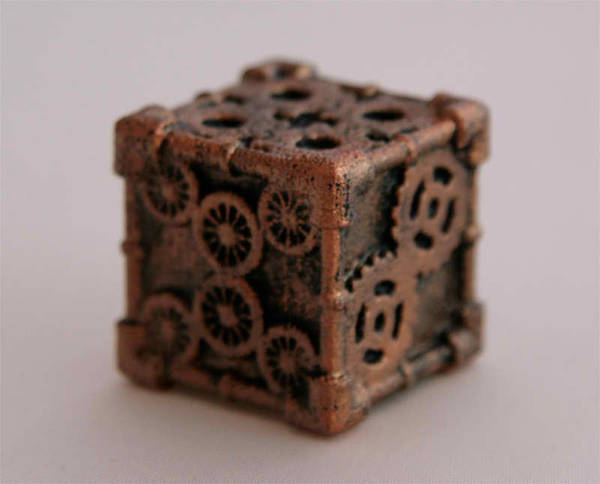
Skill Dice


When you make an ability check, you add a skill die to the roll when you can justify that it falls within one of the 3e skill categories that you are given as part of your background/specialty/theme package. So, for instance, a first level Rogue with the Scout theme adds 1d4 to her ability checks (on a d20) for Disable Device, Knowledge (Nature), Sneak, and Survival. The skill die improves with level, so that at 20th level the Rogue uses all the same skills at 1d12.

This is the basic skill mechanic in the latest playtest packet from 5e. It's pretty simple.

In some ways, the ideas that have been debuting for Next have felt both familiar and avant-garde, and the skill dice mechanic is an example of this. It reminds me of the randomized attack bonuses in 3e's Unearthed Arcana. Many things seem to remind me of that particular rule, I suppose because of the difference that it illustrates between Average Improvement and Incremental Improvement.

These two terms I am using to differentiate between an improvement of +1 per level (Incremental) and an improvement from 1d4 to 1d6 (Average). The former tends to contribute to bonus inflation and min/maxing, the latter… I'm not sure. I kind of like the idea of increasing a die because it allows for definite improvement without marginalizing the random elements. At certain points in 3e, rolling dice became annoying as one acquired enough bonuses to feel 'above' to luck of the die. 4e was built with this in mind, as many hits and damage amounts are rendered automatic. The 'skill dice' system seems to allow for improvement without entitlement, and that's a good thing. It also consciously builds off of the Ability Check system without rendering the former pointless or underpowered, like the 3e skill system did.

One question: what about picking up skills later? I haven't seen many good ideas for this, despite the fact that one assumes that adventurers would develop in new and unexpected ways as they continued their journeys. This would seem to be at odds with a class system, where one's powers at 20th level are assumed to be direct extrapolations of 1st level abilities. I like my Token Proficiencies, but they are just a way to formalize ad-hoc knowledges and special abilities.

Huzzah!

dndclassics.com

And on this day, January 22, I recognize that the Edition Wars, which had cost us all so much in life and sanity, are nearing their end.

Now if only Wizards would extend the OGL ...

The Isil-Ithil


(or, what I use when I need some Lovecraft in my game)

The Isilithil are an ancient race of eyeless subterraneans who despise loud noise. The caverns under their control are vast and quiet, often haunted by other silent creatures. They are roughly a head shorter than most humans, with  a mass of tentacles on their face and no other visible features. Their skin is cold and clammy.

While their technology has become primitive over the centuries, the remains of their dull-grey rock cities remain, enormous and monolithic, on the shores of deep underwater lakes. They often commit bloody sacrifices of captured humanoids, and legends abound of entire towns claimed in the middle of the night. Those who have observed them in their lairs and lived (a rare feat) report that the sacrifices are accompanied by horrific dances around silent fires.

Their principal ability is to cast a Zone of Silence spell (15'-30' radius) at will. They attack in other ways as Grimlocks, but tend to prefer to follow their prey at a distance for some time. They will investigate any loud noises in their chosen caverns, and occasionally mix strange poisons for their blades. No-one knows how (or what) they eat.

The Alignment Game

People always debate alignment in terms of philosophy: the meaning of law/chaos, what exactly alignment says about your character, what it means for a character to behave 'outside his alignment' and what, if any, consequences there should be. The main reason that alignment is often discarded is that players tend to find it restrictive to the way they want to play the game, instead of giving them a clear picture of the kind of guy their character is. I think many old schoolers don't really prefer the idea of alignment as an iron-clad set of rules, and instead tend to try to make it morally more interesting and thus more inspirational for the players. Also, a well-conceived approach to alignment can really help develop the vibe of the world you are playing in. But I think there is another way to approach alignment.

Instead of talking about D&D as one game, for the moment let's think of it as multiple games beneath one umbrella. I think this makes a little more sense in the old school world, which tends to love multiple subsystems and approaches for things. If we look at it that way, we can ask each individual element what its 'game' is, what makes it uniquely fun. What is the combat game? The adventuring game? The domain-building game?

So the question becomes: What is the alignment game?

First Edition has a couple of uses for alignment besides character behavior. It is used for various protective spells and magic items, and in the utterly bizarre idea of 'alignment languages'. It makes sense for multiple alignments to cooperate so as to accommodate many possibilities for languages, items and spells. Even though I believe the rule prohibit this to some degree (I don't think Paladins can knowingly hang out with Assassins and whatnot), any party would still benefit from possessing several alignments. It's possible to invent all kinds of similar plays off of this idea, from magic items that work differently with different alignments, to gates that only allow certain alignments to pass through unless disabled. So alignment becomes a benefit or a detraction based on circumstance, another choice that players have to make and then make the most of, like how many gallons of lamp oil or how much wolfsbane to pack.

This doesn't mean there aren't alternatives to the alignment system as presented. I just want to suggest that instead of attempting to come up with a better set of moral principles or roleplaying aids, let's try thinking along the lines of what sort of game we want to play with an alignment system. Then we can maybe get over the idea of alignment as a set of dubious restrictions and think of it as another facet of the complex world of adventuring.

Goodwife encounters are with a single woman, often indistinguishable from any other type of female (such as a magic-user, harlot, etc.). Any offensive treatment or seeming threat will be likely to cause the woman to scream for help, accusing the offending party of any number of crimes, i.e. assault, rape, theft, or murder. 20% of goodwives know interesting gossip.

I love the Gary DMG. 

Hello again, blogosphere. We haven't spent enough time together. 


An Unusual Ability Check System


This idea is an homage to some of the weirdness in the 3e Unearthed Arcana book, and a friendly wave to 5e D&D as well. There is probably some stuff from GURPs and WaRP in there too.

Instead of assigning ability scores, you assign a die to the various abilities, from 1d4 (not so great) to 1d12 (superhero).

One way of doing this is to start everybody out at 1d6 for everything (‘average’) and let them increase/decrease scores from there (in other words, let one ability fall to 1d4 to raise another to 1d8, etc.). You can also randomize the assigned dice with a d10 roll or something. I like to start folks out at 1d8 for two ‘main’ abilities and 1d6 for everything else, then up and down as you please. ANYWAY…

When making a check, roll your Ability Die (AD) + 2d6.

If in an ‘advantageous’ position (surprise, flanking, particular skill set, etc.) roll 3d6 + AD, drop the lowest.

If in a ‘disadvantageous’ position (being flanked, on slippery ground, drank too much) roll 3d6 + AD drop the highest UNLESS the highest is the AD, in which case you drop the next highest.

If you want to have weirdstupidfun, you can replace d20 rolls with the above system as well, and just use STR or DEX to hit based on weapon.